30-Second Chair Stand Test: A Safe Strength Progression Plan
Learn how to set up, score, and interpret the 30-second chair stand test, then turn the result into a cautious six-week lower-body strength plan.
This article is for general education only and is not medical advice. Stop exercise and seek qualified care for chest pain, fainting, severe shortness of breath, neurological symptoms, uncontrolled blood pressure, recent surgery concerns, pregnancy-related concerns, or symptoms that worsen instead of improving.
Evidence and boundary review
BodyWise Lab articles cite primary sources, show update dates, and separate practical routines from clinical decisions. Source-checking is an editorial process, not a personal medical endorsement.
Getting out of a chair is a small task that reveals a useful intersection of leg strength, balance, coordination, confidence, and everyday function. The 30-second chair stand test turns that task into a repeatable count. Its value is not the number alone. The value is using a standardized setup, understanding what can distort the result, and choosing a proportionate next step.
CDC includes the assessment in its STEADI fall-prevention toolkit. The original validation study found good test-retest reliability and a meaningful relationship with lower-body strength in generally active, community-dwelling older adults (Jones, Rikli, and Beam). That makes the test useful as a screen and progress marker—not a diagnosis, a competition, or permission to ignore symptoms.
Decide whether a home test is appropriate
Do not start by setting a stopwatch. Start by deciding whether an unsupervised test is sensible today.
Pause and ask a clinician or physical therapist first if you have a recent fall or fracture, new or unexplained dizziness, fainting, rapidly worsening balance, severe joint pain, a recent operation, an acute illness, unstable heart or lung symptoms, or instructions to limit weight-bearing. Someone who cannot rise safely without using the arms should not repeatedly force the standard arms-crossed version.
Stop immediately for chest pressure, faintness, severe breathlessness, sudden weakness, new neurological symptoms, or sharp escalating pain. Emergency symptoms require urgent care, not a better score. NIA advises that people with chronic conditions can often be active, but the plan may need condition-specific adjustment and gradual buildup (NIA guidance).
The test is easy to misread after poor sleep, illness, unusually hard training, a medication change, or a painful flare. Postponing is better than manufacturing a “baseline” that does not represent normal function.
Reproduce the CDC setup
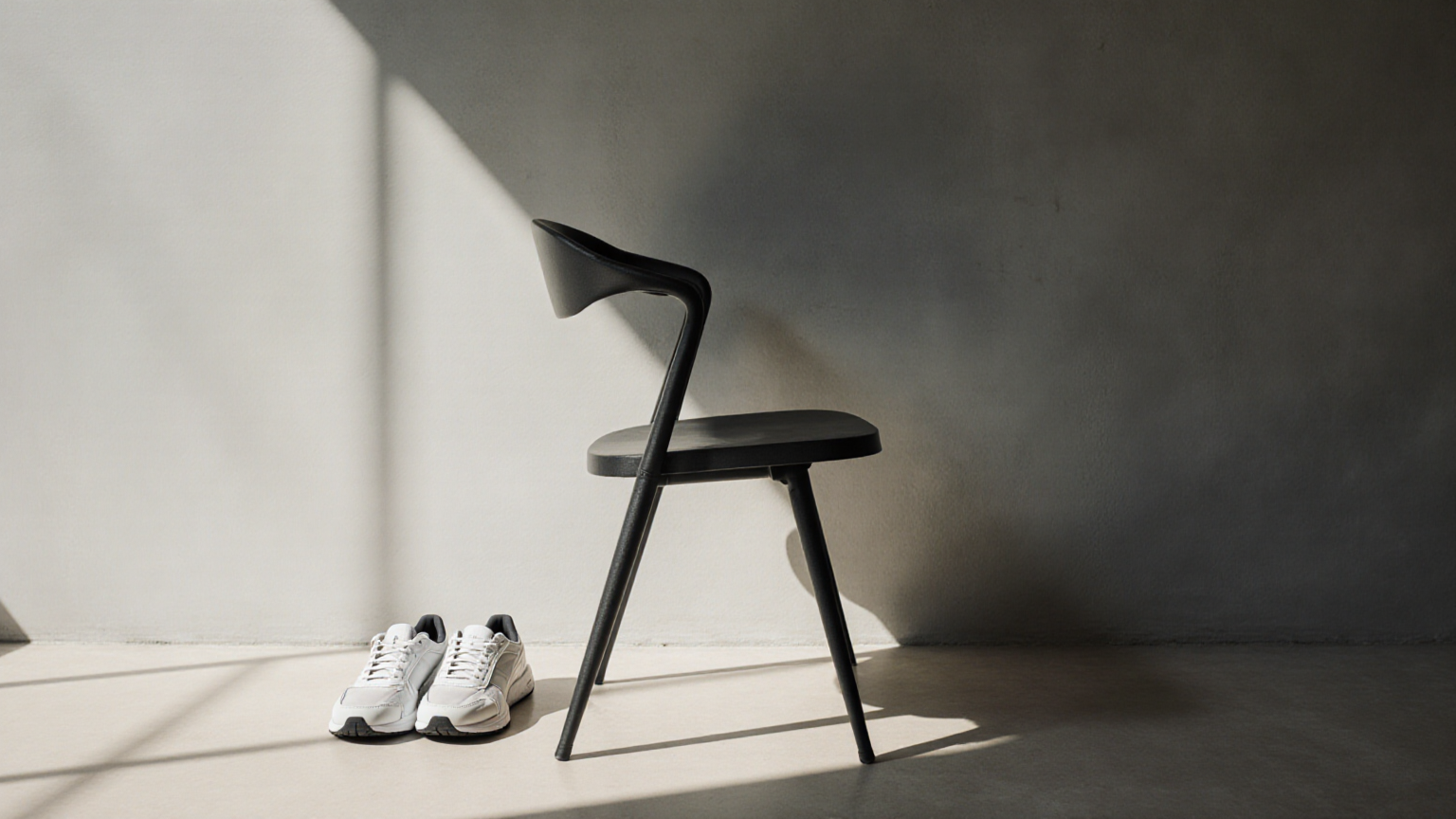
The CDC assessment sheet specifies a straight-backed chair without armrests, approximately 17 inches high, and a stopwatch. Small changes matter because a higher seat shortens the movement and a soft sofa absorbs force.
- Place the chair against a wall so it cannot slide.
- Clear rugs, pets, cords, and clutter from the floor.
- Wear secure, flat footwear on a dry, nonslip surface.
- Sit in the middle of the seat with feet flat.
- Cross each hand to the opposite shoulder and keep the arms against the chest.
- Have another adult stand close enough to guard if balance is uncertain.
- On “go,” stand fully and sit with control as many times as possible in 30 seconds.
- Count each full stand; CDC counts a final repetition if more than halfway up when time ends.
If the arms are needed, stop the standardized test and record standard test not completed rather than disguising an assisted repetition as a normal score. The need for support is useful information that points toward safer assessment and exercise selection.
Score without turning a screen into a verdict
CDC publishes sex- and age-banded “below average” cut points for adults 60–94. Those reference values help clinicians recognize a signal that deserves attention. They are not universal pass/fail standards for every body, diagnosis, disability, chair height, or population.
The original study involved 76 older adults in its main validation sample. Participants were community-residing, ambulatory, functionally independent, and medically cleared for maximal lower-extremity testing. A reference derived from one selected group cannot explain why a different person scored lower.
A single score can reflect:
- quadriceps and hip strength;
- movement speed and endurance;
- balance and fear of falling;
- knee, hip, back, or ankle symptoms;
- chair height and floor friction;
- fatigue, medication effects, or blood-pressure responses;
- practice with the exact task.
Broader performance batteries combine chair rises with balance and walking speed because lower-extremity function is multidimensional. Foundational Short Physical Performance Battery research linked combined performance to later disability-related outcomes in adults 71 and older (Guralnik and colleagues). That evidence supports taking function seriously, but it does not let one home score predict an individual future.
A transparent pace calculation
Suppose a person completes 10 full stands in 30 seconds. Their test pace is:
10 stands ÷ 30 seconds × 60 = 20 stands per minute
This is descriptive. Do not prescribe a one-minute set at the same pace; fatigue and technique change. If a later standardized retest reaches 12 stands, the absolute change is 2 stands, and the relative change is 2 ÷ 10 × 100 = 20%. The arithmetic is real, but it cannot separate adaptation from learning, pacing, pain variation, or setup differences.
Turn the baseline into a six-week plan
The safest training dose is not “repeat the test every day.” Testing asks for maximum repetitions in a fixed window. Training should use controlled submaximal sets, recovery, and gradual progression. CDC says adults 65 and older need aerobic, muscle-strengthening, and balance activity each week, including muscle strengthening on at least two days (CDC overview). The federal Physical Activity Guidelines provide the broader framework.
| Starting situation | Safer entry point | Progress signal | Do not progress when |
|---|---|---|---|
| Standard stand is steady and pain-free | 2 sets of 5–8 controlled repetitions, twice weekly | Both sets finish with stable feet and 2–3 good repetitions in reserve | Technique speeds up, knees buckle, or symptoms rise |
| Arms are needed | Higher firm chair or light hand support after professional guidance | Less hand pressure and smoother control | You pull hard, drop into the chair, or feel unsafe |
| One side is painful or notably weaker | Clinical assessment before loading asymmetrically | Cause and safe range are clarified | Pain changes gait or persists after the session |
| Balance confidence is low | Guarded practice near stable support | No grabbing, swaying, or delayed dizziness | The environment cannot be made safe |
Weeks 1–2: make every repetition look the same
Train twice per week with at least one recovery day between sessions. Use a chair height that allows control. Place feet where you can rise without repeated rocking, lean the trunk slightly as needed, drive through the whole foot, stand tall, then sit slowly enough to feel the seat rather than collapse onto it.
Start with 2 sets of 5 repetitions if that is comfortably below your maximum. That is 10 total repetitions per session and 20 per week. If five is not controlled, reduce the set size or use an appropriate supported variation. If five is easy, first make the descent quieter and more consistent instead of testing speed.
Weeks 3–4: add volume before complexity
When both sessions are symptom-stable, add one repetition to each set:
- Week 3: 2 × 6 = 12 per session, 24 per week.
- Week 4: 2 × 7 = 14 per session, 28 per week.
From 20 to 28 weekly repetitions is a 40% increase. If this jump is too large for recovery, hold a week or progress only one set. Progressive resistance guidance supports systematic overload, but progression must follow capacity rather than a calendar (ACSM position stand).
Weeks 5–6: choose one progression variable
Choose one, not all, of the following:
- add one controlled repetition per set;
- slow the lowering phase slightly;
- use a marginally lower firm chair if joint range and control permit;
- hold a light, symmetrical load close to the body after learning safe technique;
- add a separate hip-hinge, calf-raise, or step exercise.
Do not lower the chair, add weight, increase speed, and add sets in the same week. The minimum-dose strength plan explains why a small repeatable dose can outperform an ambitious plan that is abandoned.
Add balance and walking rather than over-specializing
Chair stands train a specific functional pattern. They do not fully train walking endurance, reactive balance, vision, vestibular function, or obstacle negotiation. WHO emphasizes that all movement counts and that older-adult programs should include varied activity (WHO fact sheet).
A practical week might pair two chair-stand sessions with walking appropriate to ability and short supported balance practice. The exercise-snacks guide offers ways to distribute movement without turning every break into maximal exercise.
Exercise programs reduce falls in community-dwelling older adults, especially when they challenge balance and include multiple categories, according to a large Cochrane review (Sherrington and colleagues). That does not prove chair stands alone prevent falls. CDC also emphasizes medication review, vision, home hazards, osteoporosis, and broader clinical screening (CDC fall prevention).
Retest for a decision, not reassurance
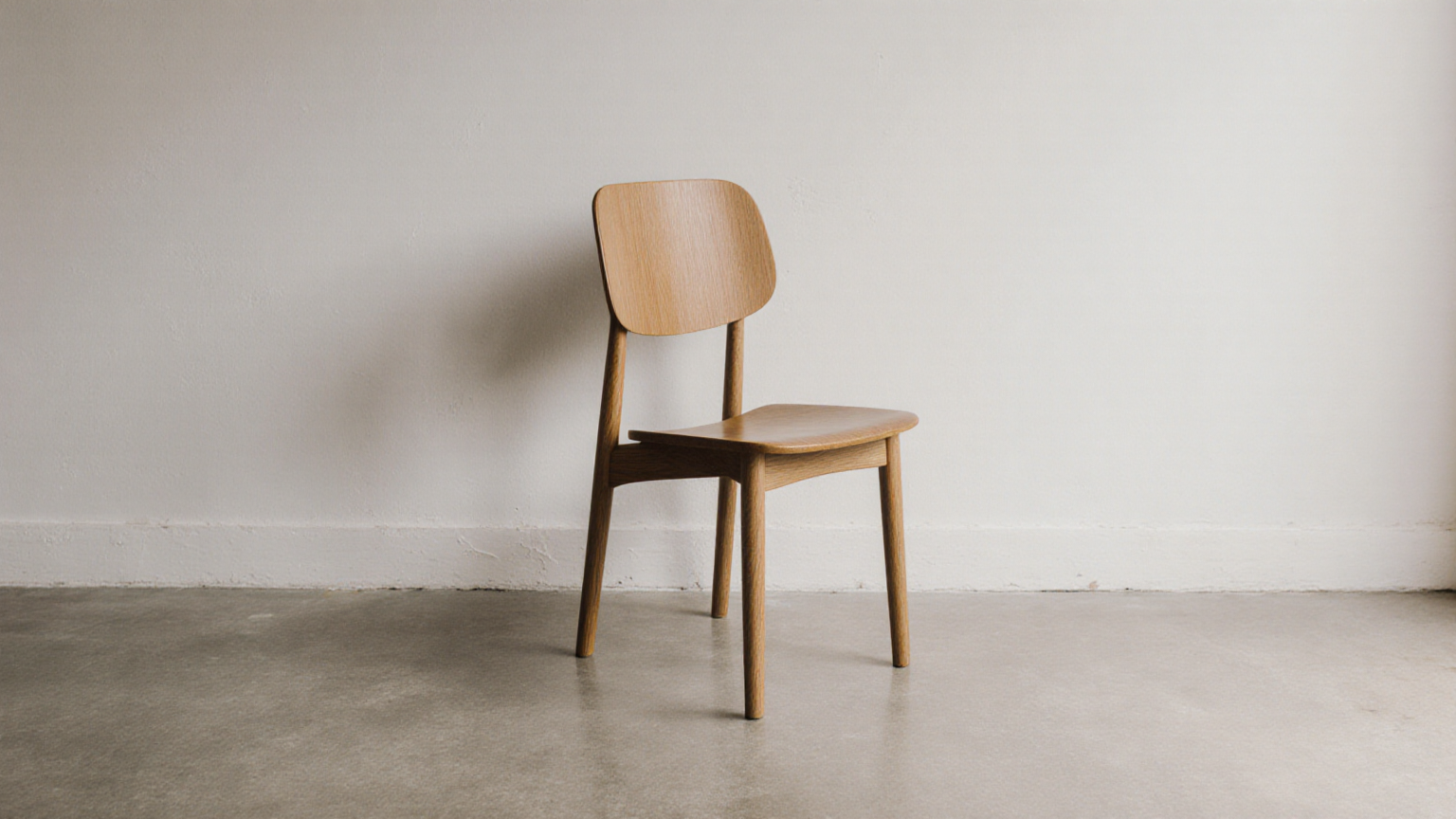
Retest after six weeks only if the result will inform a decision: continue, progress cautiously, or seek assessment. Use the same chair, shoes, time of day, instructions, floor, and helper. Avoid retesting the day after hard exercise or during an illness flare.
| Field | Example | Why it matters |
|---|---|---|
| Standardized count | 10 stands | Primary repeatable outcome |
| Assistance | None / hands / guard contact | Distinguishes task versions |
| Symptoms | Knee discomfort 1 of 10 | Explains change and protects safety |
| Setup | 17-inch firm chair, same shoes | Reduces measurement noise |
If the count improves while pain, breathlessness, or instability worsens, that is not a clean win. If the count is unchanged but movement becomes quieter, less fearful, and less assisted, function may still have improved. If performance declines across repeated standardized checks, or daily tasks such as stairs and toileting are becoming harder, arrange professional assessment rather than simply adding repetitions.
People taking blood-pressure-lowering medicine, with orthostatic symptoms, or with cardiovascular disease may need extra planning. The home blood-pressure guide and strength training with high blood pressure guide explain why symptoms, medication timing, breathing, and clinician-set limits matter.
Frequently asked questions
What does the test actually measure?
It is a functional proxy for lower-body strength and endurance under a standardized task. It also depends on balance, coordination, confidence, pain, and technique. It does not isolate one muscle or diagnose frailty.
Should I use my arms if I cannot stand otherwise?
Use support for safety in daily life and in an appropriately selected exercise, but do not count that as the standard arms-crossed test. A clinician or physical therapist can help choose chair height, assistance, and progression.
Is a below-average score proof that I will fall?
No. CDC uses the score as one fall-risk signal. Previous falls, medicines, vision, blood pressure, gait, balance, cognition, footwear, and the home environment can alter risk.
How much improvement is meaningful?
There is no universal home threshold for every person and setup. Look for repeatable change under identical conditions, better movement quality, easier daily tasks, and no worsening symptoms.
Can younger adults use the test?
They can perform chair stands, but CDC’s displayed reference table is for ages 60–94. Applying those cut points to a younger adult is not valid. Younger people may need a different assessment aligned with their goals.
Bottom line
The 30-second chair stand test is useful when standardized, interpreted as a screen, and connected to a cautious decision. Set up the same firm chair, protect against falls, record assistance and symptoms, and avoid turning a reference table into a diagnosis. Train with controlled submaximal repetitions twice weekly, progress one variable at a time, add walking and balance work, and retest only after enough time for adaptation. Function matters most when it improves real life safely—not when a stopwatch produces a more flattering number.