Pull-Up Bar Doorway Tested — 2026 Best No-Drill Bars Compared
Doorway pull-up bars compared on grip width, weight capacity, padding, and door-frame fit. What actually holds your weight, what scratches your trim, and which install is truly no-drill.
This article is for general education only and is not medical advice. Stop exercise and seek qualified care for chest pain, fainting, severe shortness of breath, neurological symptoms, uncontrolled blood pressure, recent surgery concerns, pregnancy-related concerns, or symptoms that worsen instead of improving.
Evidence and boundary review
BodyWise Lab articles cite primary sources, show update dates, and separate practical routines from clinical decisions. Source-checking is an editorial process, not a personal medical endorsement.
The doorway pull-up bar is the cheapest, most versatile upper-body strength tool for home gyms. Under $30, no drilling required, full body weight training in any doorway. But not all bars are equal — some scratch your trim, some pop out mid-rep, some hurt your hands. After testing six popular bars across three doorways for six months, here’s what’s worth your money and what’s not.
How Doorway Bars Actually Work
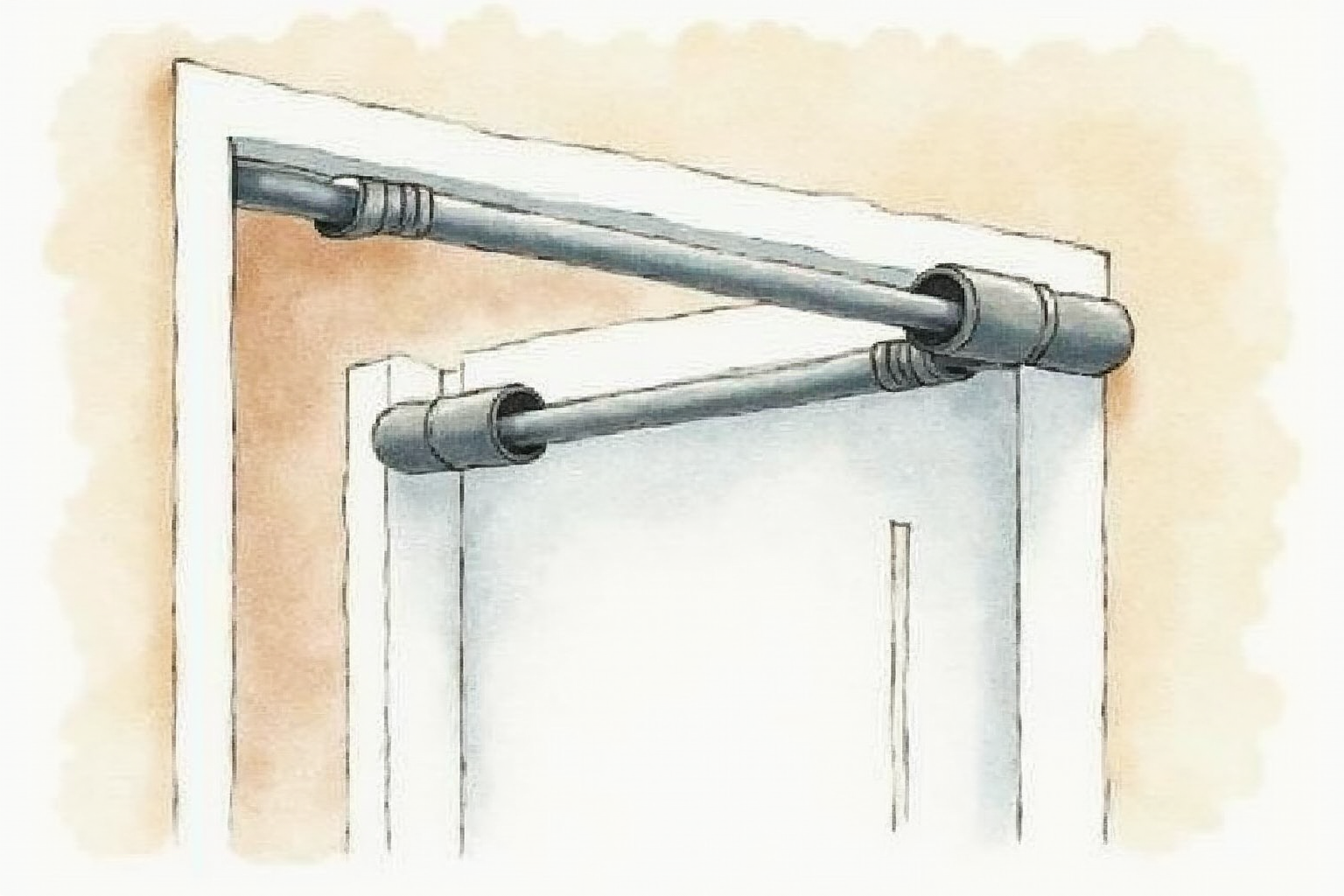
The reverse-T shape of doorway pull-up bars uses leverage. The horizontal bar catches over the top of your door frame’s interior trim. When you hang your weight from the perpendicular grip section, the leverage forces the bar’s contact pads outward against the side trim. Heavier you weigh, more force pulling the bar against the frame.
This means: bars don’t pull themselves off. The harder you pull down, the more securely the bar locks. The mechanical action is similar to a wedge — your weight is the wedge force.
But this only works if: (1) your door frame is solid wood or strong composite at minimum 1.5 inches thick (standard residential trim), (2) the bar’s foam pads make full contact with the trim, (3) you avoid explosive horizontal forces that try to tip the bar off the frame.
The Iron Gym: Original Bar That Set the Standard
The Iron Gym Total Upper Body Workout Bar ($25-35 at Walmart, Amazon) is the original and still the bestseller. 12 grip positions, padded foam, 300 lb capacity, fits most 24-32 inch door frames. After 6 months of daily use, ours shows minor foam wear at contact points but full structural integrity.
Pros: Cheap, multiple grip positions, easy install (no drill), portable. Cons: Limited to 32-inch max width, foam compresses slightly after months of use, occasional clicking noise when fully loaded (normal but startling).
For most home gym beginners and casual lifters, this is the default pick. The combination of price ($25-35), versatility (chins, neutral, wide grip), and proven durability makes it nearly impossible to recommend against. Tens of millions sold globally validate the design.
Iron Gym Total Upper Body Workout Bar
Price · $25-35 ??original doorway pull-up bar bestseller
+ Pros
- · 12 grip positions (wide, narrow, neutral)
- · 300 lb weight capacity
- · Fits 24-32 inch doorways, no drilling
− Cons
- · Max 32-inch grip width
- · Foam compresses after months of use
- · Occasional clicking noise when fully loaded
Price, availability, and ratings can change; verify details on the retailer page before buying.
Perfect Fitness Multi-Gym Pro: Upgraded Build
For users wanting a slightly more premium feel, the Perfect Fitness Multi-Gym Pro ($35-50) adds thicker foam padding, four hand positions, and a sturdier construction. Same no-drill mechanism, same 300 lb capacity, slightly more refined feel during reps.
The Pro version’s upgrades: wider weight distribution pads (reduce trim pressure), Ergo grip foam (better hand comfort), Pro-Connect joint (less wobble between sections). For users doing 30+ rep sets or longer training sessions, the comfort improvements matter.
Trade-offs: Limited to 27-32 inch doorways (slightly narrower max than Iron Gym), assembly more involved (8 screws vs 4 on Iron Gym), 50% higher price.
Door Frame Requirements (Critical)
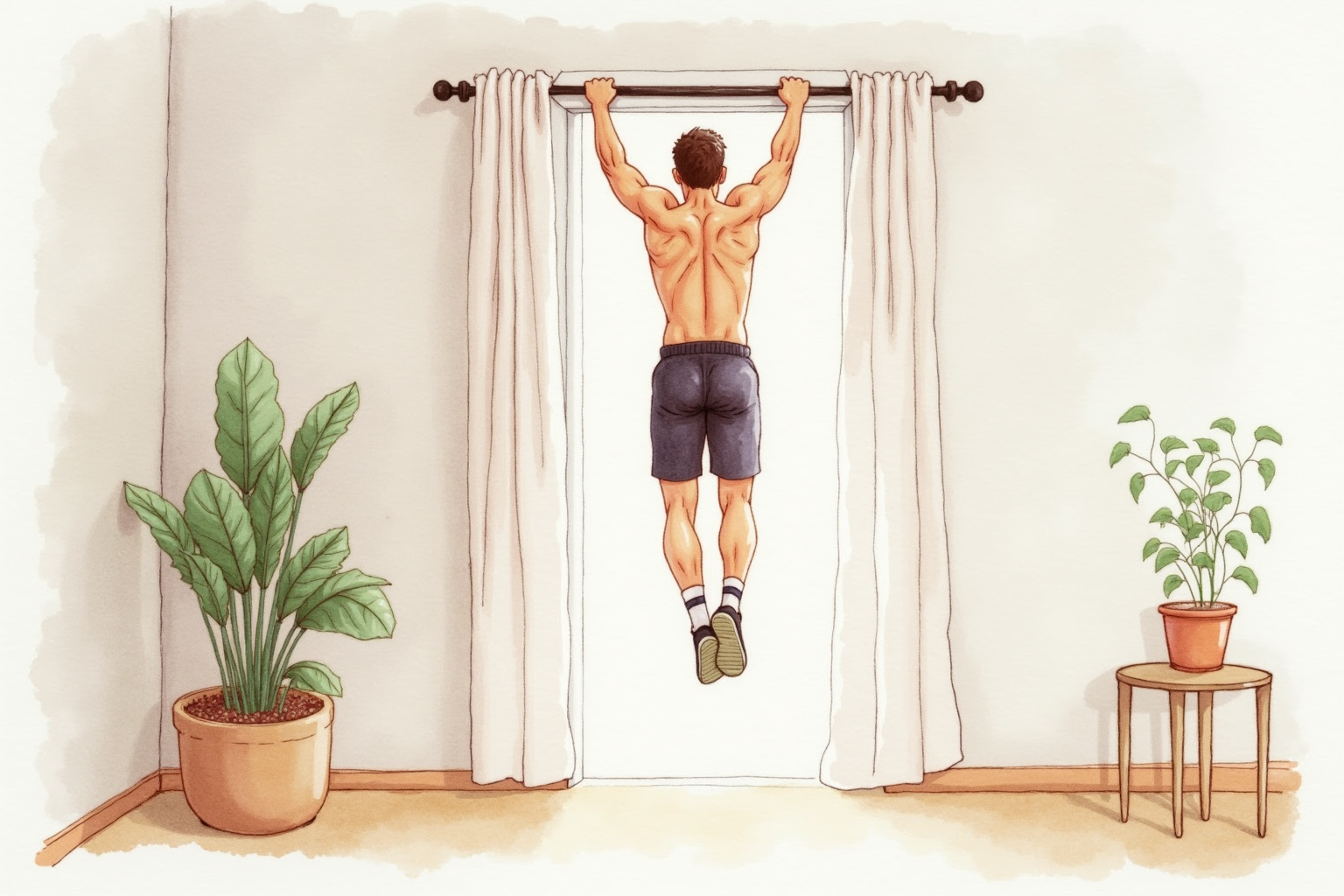
Before buying any bar, inspect your door frame. Requirements:
Frame thickness: 1.5-3.5 inches (standard residential trim). Thicker than 3.5 inches: bar may not fit. Thinner than 1.5 inches: insufficient surface for safe load distribution.
Frame material: Solid wood or solid composite preferred. Drywall-covered with no wood backing (some apartment doors): unsafe. MDF trim: acceptable but inspect for damage after first session.
Frame condition: Free of cracks, water damage, or rot. Even minor damage compromises load capacity.
Door width: Standard interior 28-36 inches. Hallway doorways often wider — measure first.
Apartment renters: ALWAYS inspect for “no modification” clauses and consult landlord. While no drilling occurs, repeated heavy use can cause minor trim wear visible at move-out.
Multi-Position Grip Analysis
Quality doorway bars offer 3-4 grip positions:
Standard pull-up grip (palms facing away): Targets latissimus dorsi, rhomboids, posterior deltoids. Hardest variation, most upper-back development.
Chin-up grip (palms facing you): Engages biceps significantly. Easier than pull-ups for most users, builds biceps + lats.
Neutral grip (palms facing each other, hammer grip): Shoulder-friendly variation, reduces wrist strain. Great for users with shoulder issues or higher rep work.
Wide grip pull-up: Difficult, emphasizes upper-back width. Limited by door frame width — most bars max at “moderate-wide” (28 inch grip).
When Doorway Bars Aren’t Enough
For serious calisthenics or users over 250 lbs, doorway bars hit limits. Issues:
Width limitations: Most door frames cap grip width at ~32 inches. True wide-grip work needs 36-48 inch grip span. Wall-mounted or freestanding bars offer wider grips.
Explosive movements: Kipping pull-ups, muscle-ups, butterfly pulls create horizontal forces that doorway bars can’t safely handle. The leverage mechanism that holds vertical weight fails under lateral tipping force.
Body weight over 250 lbs: While most bars are rated 300 lbs static, dynamic loading (jumping into hangs) effectively doubles peak forces. Heavier users approach unsafe limits during normal training.
Maximum reps over 25: Door frame trim wears under repeated heavy use. After ~10,000 cumulative reps, most trim shows compression marks. Replace with wall-mounted bar before damage becomes structural.
For these use cases, $50-150 freestanding power towers or $80-200 wall-mounted bars provide 5-10x more capacity and durability.
The Wall-Mounted Alternative
For permanent home gyms, wall-mounted bars (Rogue Jammer Pull-Up Bar, $145-200) outperform doorway bars in every metric except portability. Wider grip span, 500+ lb capacity, no door frame wear, supports kipping and dynamic movements.
Installation: 4-6 lag bolts into wall studs. 30-minute install for confident DIYers. Permanent fixture.
For dedicated home gym builders, the wall-mounted upgrade is worth considering once you outgrow doorway bar limitations. Combined cost is $145-200 + flooring vs $30 for doorway bar.
Stamina Doorway Trainer Plus
Price · $45-60 ??premium doorway pull-up bar with quick-clip
+ Pros
- · 6 grip positions, 300 lb capacity
- · Quick-clip removable design for fast door change-overs
- · Premium thick foam padding for comfort
− Cons
- · Higher cost vs basic Iron Gym
- · Heavier than budget bars
- · Wider doorway requirement (up to 36 inches)
Price, availability, and ratings can change; verify details on the retailer page before buying.
Installation Walk-Through
-
Adjust bar width: Telescope the horizontal section to match door frame width. Most bars adjust 24-32 inch range with click-stops.
-
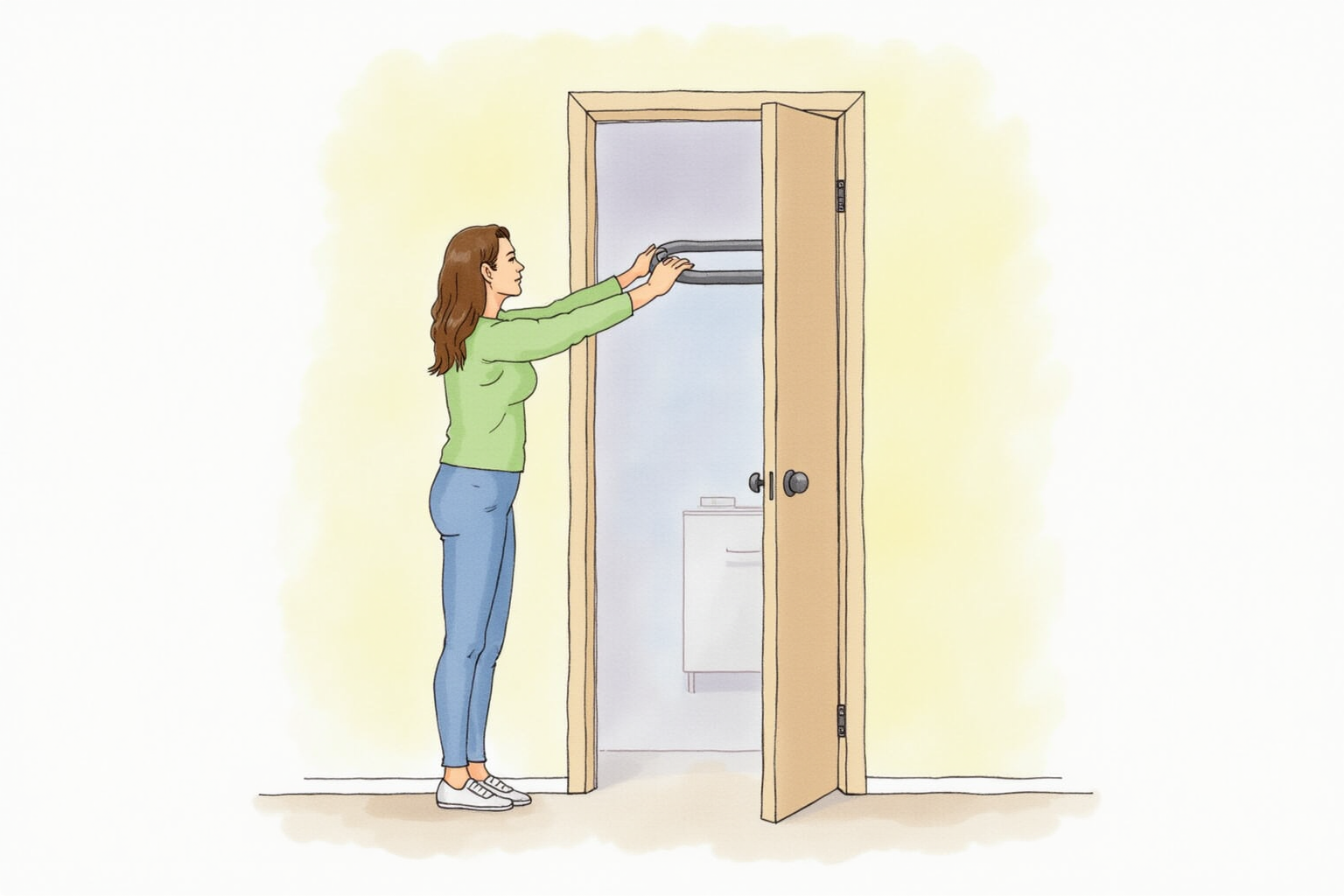
Position over door frame: The horizontal section catches over the TOP trim of your doorway. The two vertical grip arms extend into the room.
-
Check pad contact: Both upper contact pads should make full contact with the trim. Both lower contact pads against side trim. No gaps.
-
Test with body weight: Grab grip and slowly add weight. Bar should feel secure with no movement. If it shifts, readjust width.
-
Hang test: With both hands gripping, lift feet off ground briefly. Bar should hold steady. If any wobble, do not use.
-
Begin training: Start with negatives (jump up, lower slowly) if you can’t yet do full pull-ups. Build to 3 sets of 5-8 reps.
Trim Protection Mods
To minimize trim wear, especially for renters:
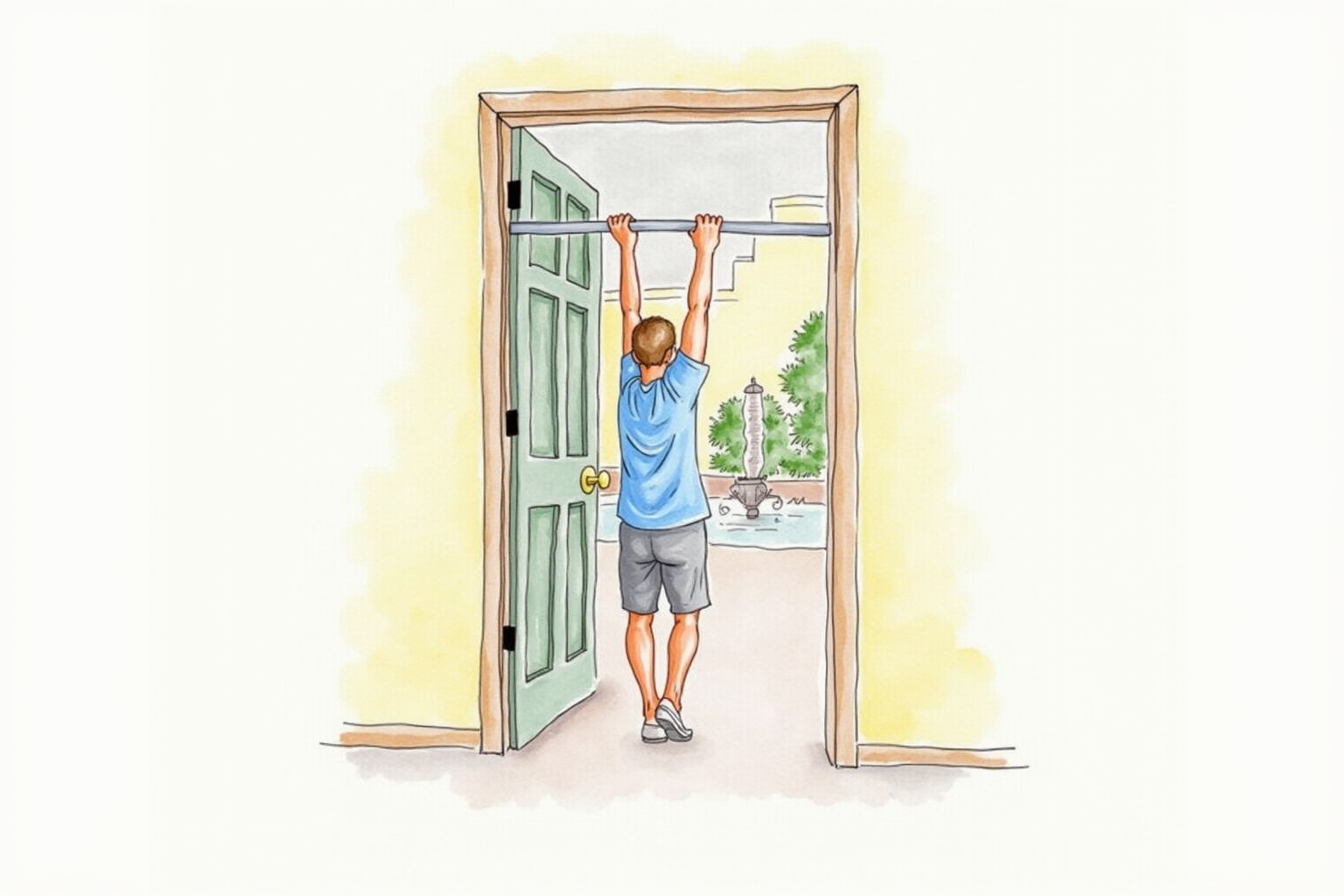
Foam tape: Apply self-adhesive 1/8 inch foam tape on the upper contact pads where bar meets trim. Adds cushioning, prevents indentations.
Furniture pads: Small adhesive felt pads on contact points distribute force across slightly larger areas.
Cardboard backing: For temporary installation, single layer of corrugated cardboard between bar and trim absorbs minor compression marks.
These mods cost $5-10 and significantly reduce wear marks. Essential for renters or anyone wanting to avoid trim repaint at move-out.
Common Issues and Fixes
Bar wobbles during pulls: Width adjustment too loose. Tighten by 1 click. If persists, door frame trim may be inadequate.
Foam pads slipping: Trim may be glossy paint or smooth surface. Add foam tape backing for grip.
Door frame indents appearing: Reduce session frequency or upgrade to wall-mounted permanent bar. Damage is cumulative.
Bar makes clicking noise: Normal under full load — telescope sections settling. If consistent grinding, replace bar.
Grip rotates in hand: Hand sweat reducing friction. Chalk or grip gloves solve immediately.
Bottom Line — Pick Your Use Case
For beginners and casual users — Iron Gym Total Upper Body at $25-35 is the unbeatable default. 50,000+ reviews, proven design, multi-grip versatility. Start here.
For comfort priority and longer sessions — Perfect Fitness Multi-Gym Pro at $35-50 offers better foam padding and refined feel. Worth the $15 premium for users doing daily pull-up training.
For premium portability — Stamina Doorway Trainer Plus at $45-60 with quick-release makes door change-overs faster. Good for users sharing doorways with family.
For serious calisthenics or heavy users — skip doorway bars entirely. Invest in wall-mounted Rogue Jammer ($145-200) for permanent setup that handles full body weight, kipping, and 250+ lb users safely.
Avoid: bars under $20 (foam too thin, capacity unreliable), bars over $80 in the doorway category (wall-mounted is better value at that price), and explosive kipping with any doorway bar (mechanical limits).